Marcus Reed
A technical investigator and former military systems contractor whose encounter with the Room transforms regret into wonder. In Book Four, he confronts the deepest threat to his sense of agency yet.
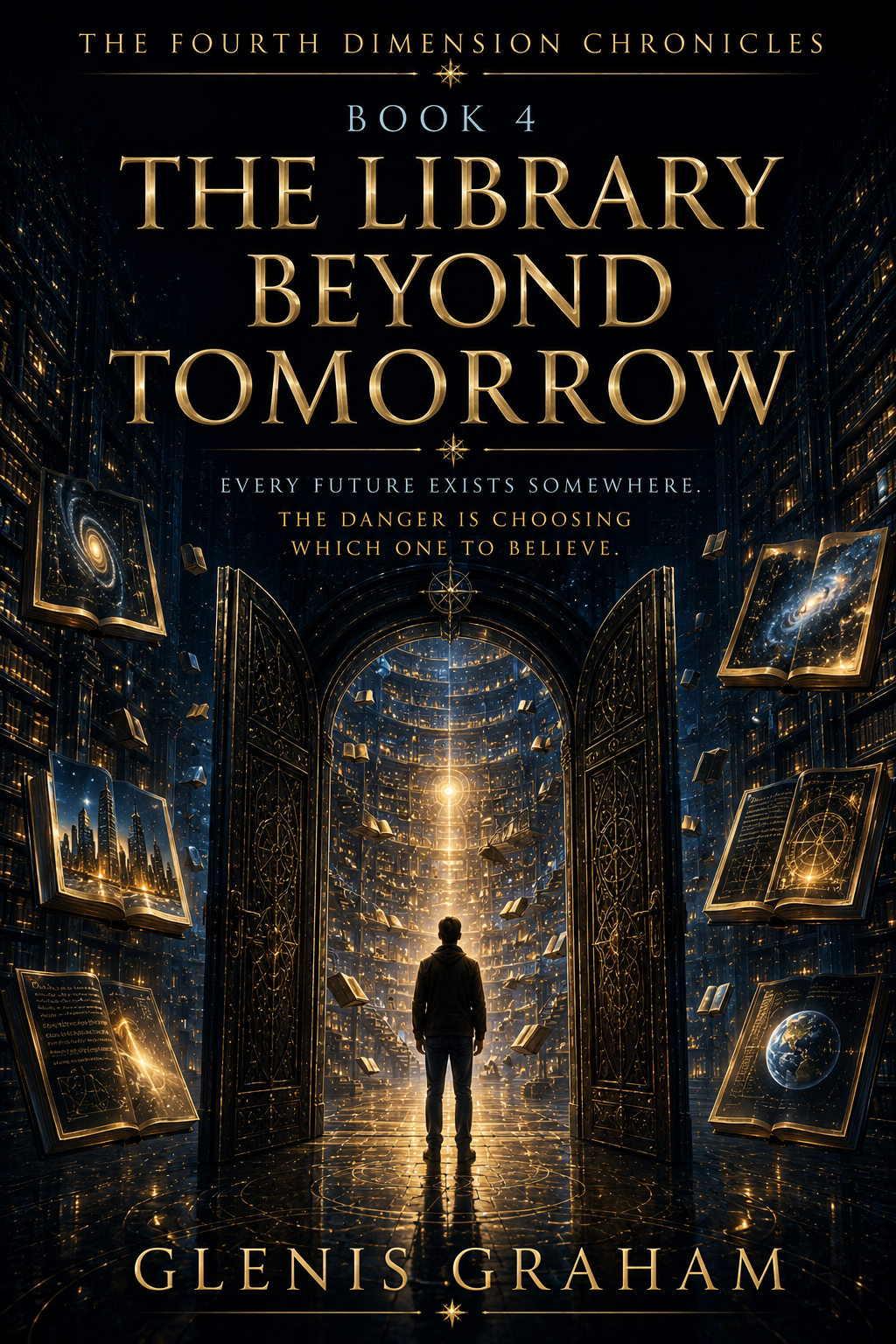
Every future exists somewhere.
A vast archive contains records of events that have not yet happened. Marcus must confront the unsettling implications of a future that may already exist while deciding whether knowledge of tomorrow is a gift or a burden.
The Library Beyond Tomorrow does not contain prophecy. It contains possibility recorded as probability — futures that could exist, not futures that must. But standing inside it, the distinction begins to feel fragile. Marcus must decide what knowing tomorrow actually costs.
Marcus enters a section of the Great Archive that holds records of events that have not yet occurred. The Library Beyond Tomorrow is not a place of prophecy. It is a living repository of future possibilities — probability made visible, outcomes preserved as they might unfold.
The problem is not that the futures are false. Many of them appear extraordinarily precise. The problem is what Marcus does once he has seen them. Knowing the future — even a possible future — changes the observer. It removes the conditions that made certain choices feel real.
The Library's deeper lesson: freedom requires not knowing everything. The Archive preserves futures. It does not mean you should read them.
The Library Beyond Tomorrow holds futures as living records, not fixed certainties. The distinction matters — but it is easy to lose inside a room that seems to know everything.
This book marks the midpoint of the series and the moment when Marcus's journey becomes genuinely dangerous to his sense of self.
A future that appears already written removes the felt reality of genuine choice. The Library asks whether knowledge of tomorrow is compatible with the experience of living freely.
Marcus confronts whether knowing what comes next is a gift or a slow erasure of the present. Some knowledge changes its holder more than it helps them.
The Library holds futures, not certainties. Possibility and probability coexist here — but the difference between a recorded future and a fixed one is harder to hold onto than Marcus expected.
The Library Beyond Tomorrow shows Marcus that freedom requires not knowing everything. This is the fourth layer of the Archive — the point where Marcus has seen the past, the forgotten, and the unchosen. Now he stands inside the future itself and must decide what that means.
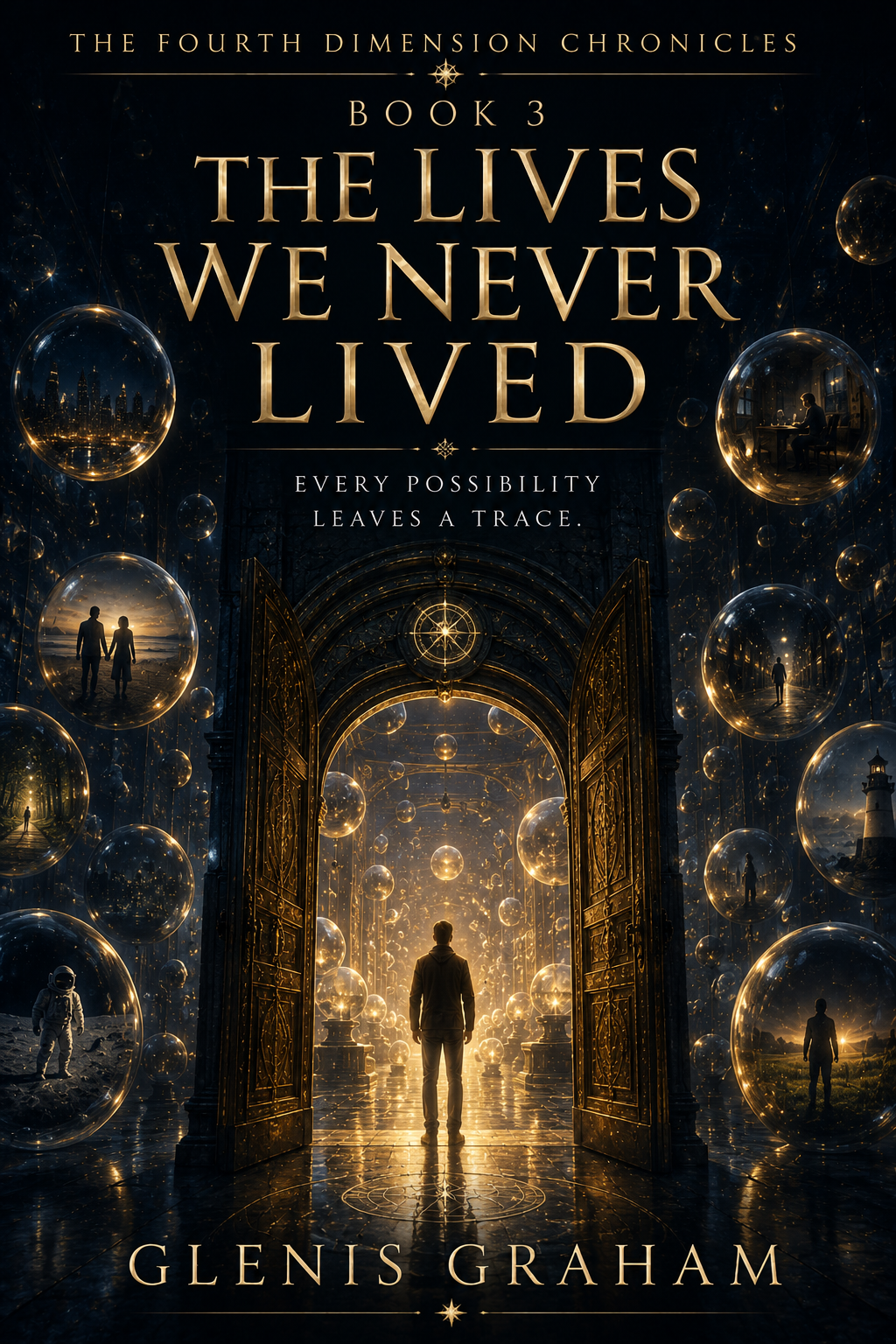
Book Three: Possibilities Persist — The Chamber of Unlived Lives revealed every path not taken and the danger of wanting another version of your life.
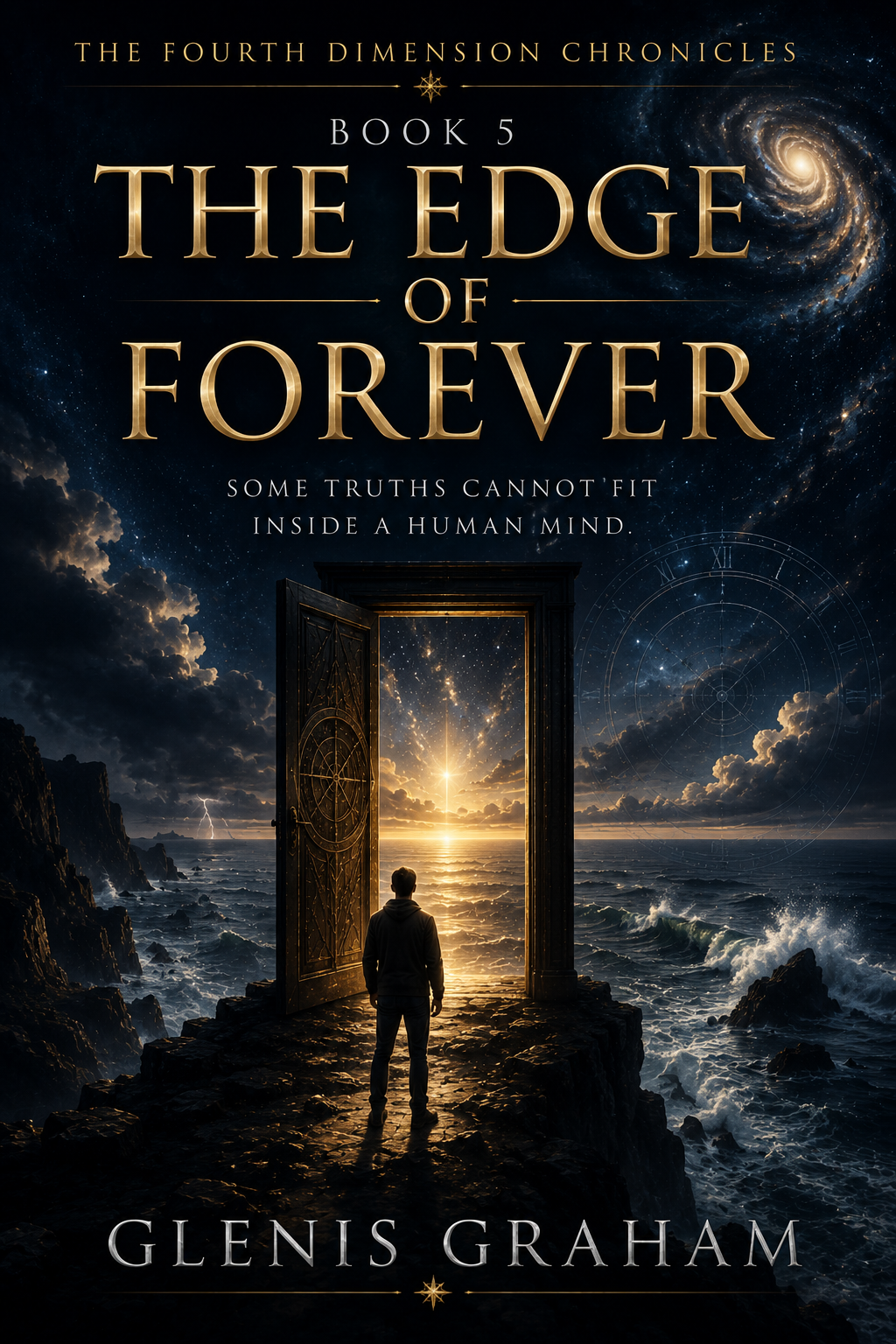
Book Five: Knowledge Has Limits — At the Edge of Forever, Marcus discovers that some truths can only be experienced, never explained.
A technical investigator and former military systems contractor whose encounter with the Room transforms regret into wonder. In Book Four, he confronts the deepest threat to his sense of agency yet.
A living repository of future possibilities, not fixed prophecies. Records here shift as probability changes.
The total preserved structure of experience: memory, choice, possibility, consciousness, and meaning.
A transformed consciousness that can perceive more of reality but cannot compel human choice.